The Power of Absence: Minimalism in Photography
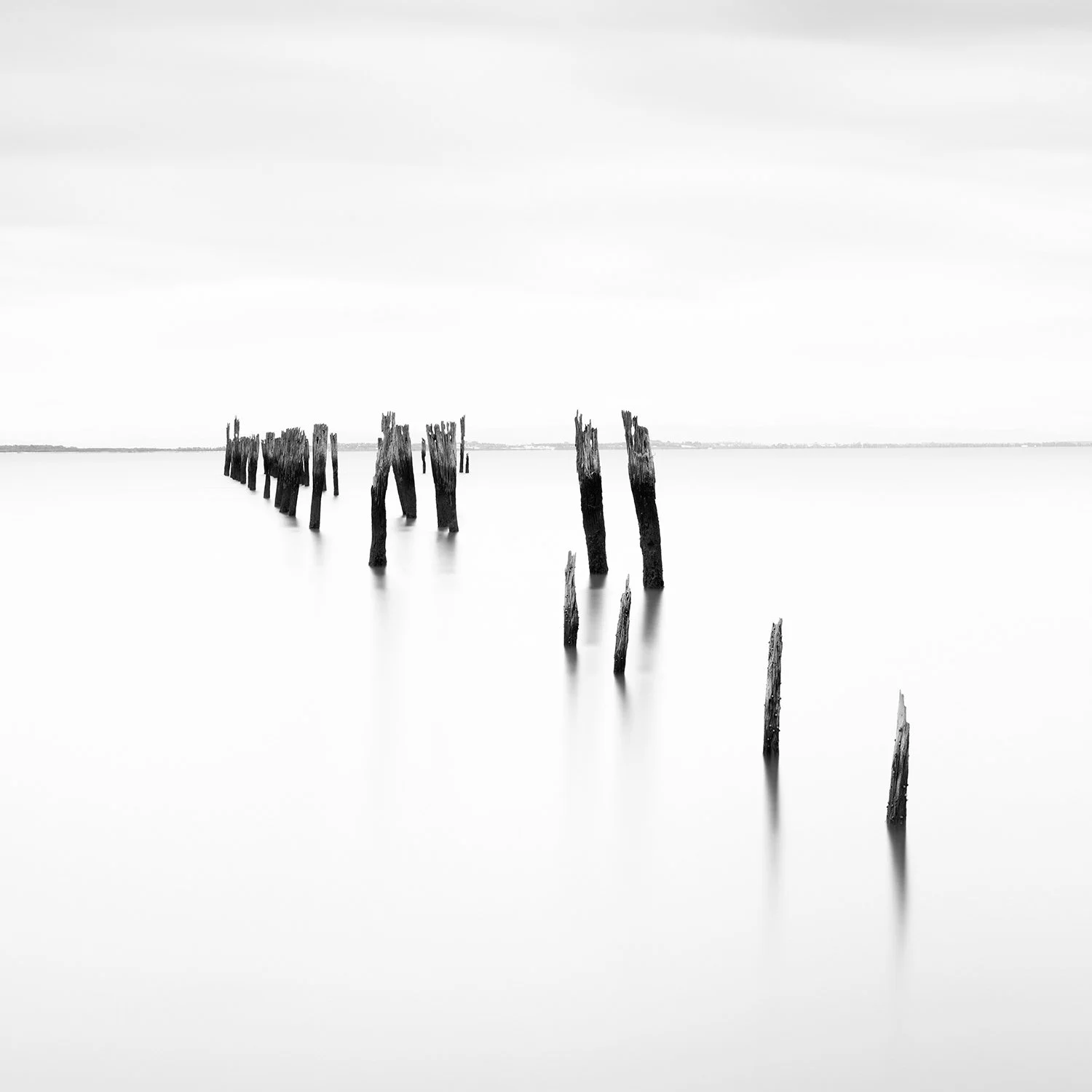
In a world saturated with imagery, where every frame competes for attention, the most powerful photographs are often the quietest.
Minimalism in photography is not about removing elements for the sake of simplicity—it is about precision. It is the deliberate act of deciding what doesn’t belong in the frame.
Absence becomes the subject.
Where most images attempt to say more, minimalist photography achieves more by saying less.
Seeing Differently
Minimalism begins long before the shutter is pressed.
It requires a shift in perception—training the eye to ignore the obvious and recognise what remains when distraction is stripped away. Lines become stronger. Shapes become more defined. Light becomes intentional.
In architectural photography, this often reveals itself through repetition, symmetry, and isolation. A single edge of a building. A shadow cutting across a surface. A lone structure standing against an uninterrupted sky.
What is left is not emptiness—but clarity.
Negative Space as a Tool
Negative space is often misunderstood as “empty space,” but in reality, it is one of the most powerful compositional tools available.
It creates balance.
It directs attention.
It introduces stillness.
In black and white photography, negative space becomes even more pronounced. Without colour to compete, tone and contrast take over—allowing space itself to carry emotional weight.
A large expanse of white sky against a dark structure can feel expansive.
A deep black void surrounding a subject can feel isolating.
These are not accidents. They are decisions.
Minimalism and Emotion
There is a quiet tension in minimal photographs.
By removing context, the viewer is left with fewer clues—and in that absence, interpretation begins. The image becomes less about documentation and more about experience.
A solitary form can evoke isolation.
A precise geometric composition can feel controlled, even architectural in its calmness.
A soft gradient of tones can feel almost meditative.
Minimalism does not tell the viewer what to think—it gives them space to feel.
The Discipline of Restraint
Perhaps the most difficult part of minimalist photography is restraint.
It is easy to add.
It is much harder to subtract.
Every element in the frame must justify its presence. If it does not contribute, it distracts.
This is where strong photographic work separates itself—through intention, not complexity.
A Natural Alignment with Black & White
Minimalism and monochrome photography share the same language.
Both rely on:
Contrast
Form
Texture
Light
Without colour, the photograph becomes more about structure and tone—allowing minimal compositions to feel stronger, cleaner, and more deliberate.
This is why many of the most enduring minimalist works exist in black and white.
Less, But Stronger
Minimalism is not about doing less work.
It is about doing more precise work.
It demands awareness.
It demands patience.
It demands the ability to walk past complexity and recognise simplicity when it appears.
In the end, a minimalist photograph is not empty.
It is refined.