Mastering Multiple Exposures on the Fujifilm X-T5
Creating Dreamlike Fine Art Photography with Fujifilm’s In-Camera Multi Exposure Modes
There is something timeless and deeply artistic about a multiple exposure photograph. Unlike a standard image that freezes a single moment, a multiple exposure combines several moments together into one frame, creating photographs that feel layered, emotional, atmospheric, and often surreal. Long before digital photography existed, photographers experimented with this technique using film cameras, carefully exposing the same frame more than once to create ghostly portraits, abstract landscapes, and artistic visual effects.
Today, Fujifilm has brought this classic photographic process into the digital era with one of the most powerful in-camera multiple exposure systems available in modern mirrorless cameras. The Fujifilm X-T5 allows photographers to create up to nine interwoven exposures directly inside the camera without the need for Photoshop or external editing software. Combined with Fujifilm’s famous Film Simulations such as ACROS, Classic Chrome, and Nostalgic Neg, the X-T5 becomes an incredibly creative tool for fine art photography, abstract landscapes, portraiture, street photography, and experimental imagery.
In this article, we will explore the complete multiple exposure system found inside the Fujifilm X-T5, including the four different blend modes — Additive, Average, Bright, and Dark — how they work, when to use them, and how to achieve powerful artistic results. We will also look at how multiple exposures were created on film cameras, why this technique continues to attract fine art photographers, and why in-camera multiple exposures are becoming increasingly popular for photographers looking to create unique and original work.
What Is Multiple Exposure Photography?
A multiple exposure photograph is created when two or more separate images are combined into a single frame. Instead of recording one scene, the camera layers several exposures together, allowing shapes, textures, movement, and light to blend into one final image.
This technique can be used subtly or dramatically. Some photographers use multiple exposures to create soft painterly landscapes, while others use them for surreal portraiture, abstract architecture, or dreamlike black and white imagery.
The beauty of multiple exposure photography is that every image becomes slightly unpredictable. Even with careful planning, each exposure interacts differently with the next, often producing results that feel organic, emotional, and impossible to duplicate exactly.
For fine art photographers, this unpredictability becomes part of the creative process.
Why the Fujifilm X-T5 Is Excellent for Multiple Exposures
The Fujifilm X-T5 is one of the best cameras currently available for in-camera multiple exposure photography because Fujifilm has designed the feature to feel intuitive and creative rather than technical.
Unlike many cameras that only allow two exposures, the X-T5 supports up to nine exposures in a single image. This dramatically expands creative possibilities and allows photographers to build layered images with depth, softness, texture, and movement.
The X-T5 also offers live preview assistance while shooting, allowing photographers to see how each exposure blends into the composition before capturing the next frame. This makes experimentation far easier compared to older film systems.
Other strengths of the X-T5 for multiple exposure photography include:
High resolution 40MP sensor
Excellent dynamic range
Fujifilm Film Simulations
Beautiful monochrome rendering
Strong highlight retention
Advanced in-camera processing
IBIS (In-Body Image Stabilisation)
Flexible exposure control
Classic tactile controls for creative shooting
For photographers who enjoy creating artistic work directly in-camera, the X-T5 feels less like a digital camera and more like a modern creative instrument.
The Four Multiple Exposure Modes on the Fujifilm X-T5
The Fujifilm X-T5 includes four different blend methods for combining exposures:
Additive
Average
Bright
Dark
Understanding these modes is essential because each one produces very different visual results.
1. Additive Mode
The Classic Film-Style Multiple Exposure
Additive mode is the closest digital equivalent to traditional film multiple exposures.
In this mode, each exposure is added on top of the previous one, meaning brightness accumulates throughout the image. If several bright exposures overlap, the result can become very luminous and high contrast.
This mode often produces dramatic, layered, and expressive images.
Best Uses for Additive Mode
Dreamlike landscapes
Abstract photography
Fine art black and white
Ghost effects
Experimental portraits
Intentional camera movement
Tree photography
Layered textures
Important Technique Tip
Because brightness accumulates, photographers often reduce exposure slightly for each frame to avoid overexposing the final image.
For example:
2 exposures → reduce each exposure by 1 stop
4 exposures → reduce each by roughly 2 stops
9 exposures → significantly reduce exposure compensation
Additive mode rewards experimentation and often produces the most emotional and painterly results.
2. Average Mode
The Most Balanced and Beginner-Friendly Option
Average mode automatically balances brightness across all exposures. Instead of simply stacking light values together, the camera averages the exposure information to maintain a more controlled final image.
This makes Average mode much easier to use for photographers new to multiple exposures.
Best Uses for Average Mode
Portraiture
Soft layered landscapes
Atmospheric street photography
Fine art compositions
Controlled artistic effects
Why Average Mode Is Popular
Average mode helps prevent blown highlights and overly bright exposures. It allows photographers to focus more on composition and movement rather than worrying about exposure mathematics.
For many photographers using the X-T5, Average mode becomes the default setting because it delivers consistent and reliable results.
3. Bright Mode
Prioritising Bright Areas
Bright mode compares overlapping exposures and prioritises the brightest areas of each frame.
Dark areas are largely ignored while highlights become dominant.
This mode works especially well for:
Light painting
Neon lights
Fireworks
City lights
Reflections
Moon photography
Abstract lighting effects
Bright mode can create highly dynamic and visually striking compositions where glowing areas appear to float across the frame.
4. Dark Mode
Prioritising Shadows and Dark Detail
Dark mode works opposite to Bright mode. Instead of selecting highlights, it prioritises darker areas of the image.
This allows shadows, silhouettes, tree branches, textures, and darker forms to build together in dramatic ways.
Best Uses for Dark Mode
Silhouettes
Forest photography
Trees and branches
Moody fine art work
Black and white photography
Texture studies
Architectural forms
Dark mode can create haunting and atmospheric images with rich tonal depth.
Why Multiple Exposure Photography Feels So Artistic
One of the reasons multiple exposure photography remains popular is because it moves photography away from pure realism.
A normal photograph captures what the eye sees.
A multiple exposure captures:
movement
time
atmosphere
emotion
memory
abstraction
This creates images that feel more interpretive and personal.
The technique often produces soft transitions, layered textures, and visual ambiguity that can resemble paintings, charcoal drawings, etchings, or old photographic processes.
For many fine art photographers, multiple exposures feel more emotionally expressive than standard photography because they combine several moments into one visual experience.
Fine Art Multiple Exposure Photography Using the Fujifilm X-T5
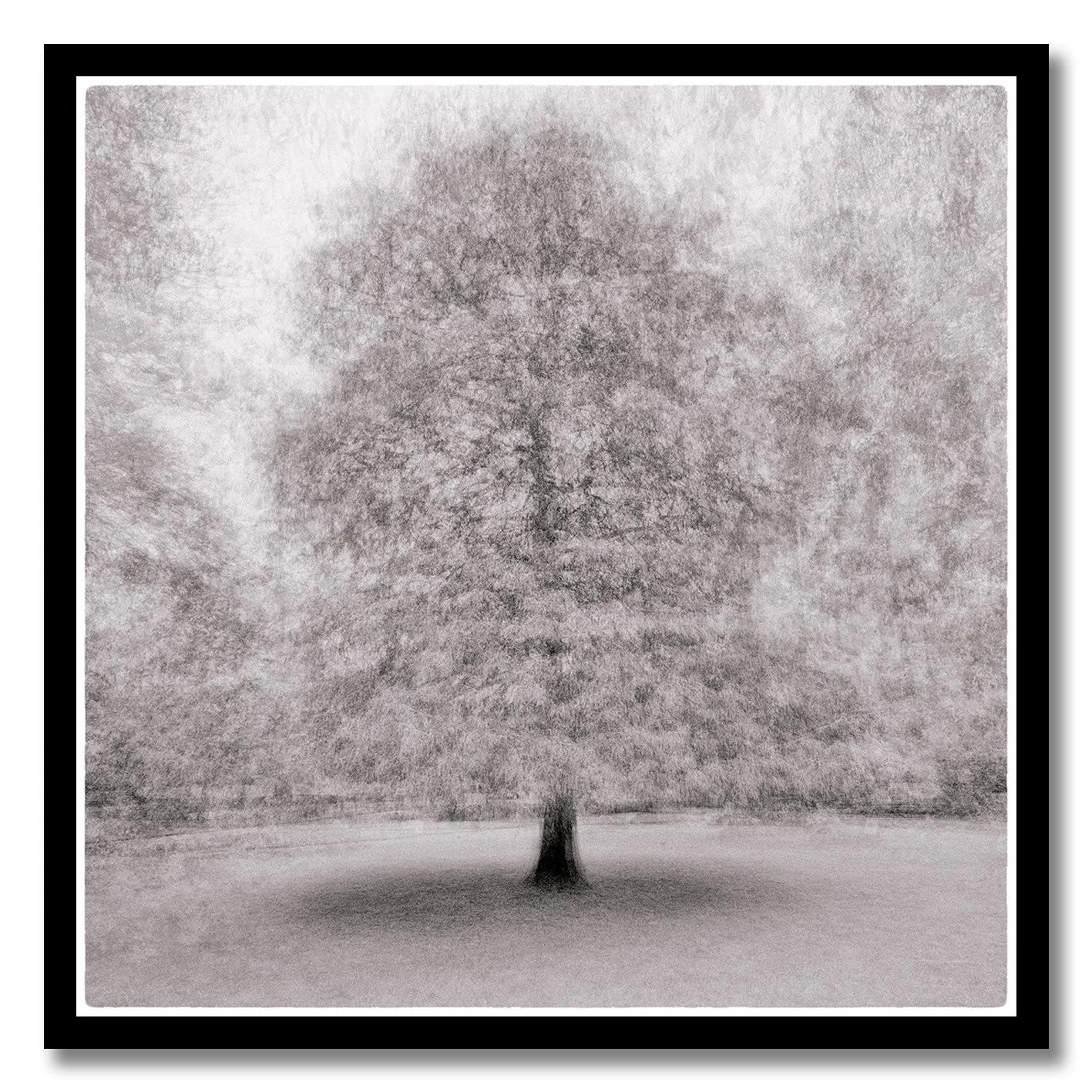
Using Fujifilm ACROS for Multiple Exposures
One of the most powerful combinations on the X-T5 is pairing multiple exposures with the ACROS Film Simulation.
ACROS is widely respected for:
Rich blacks
Smooth tonal transitions
Beautiful monochrome rendering
Natural grain structure
Strong highlight rolloff
When used with multiple exposures, ACROS creates images with incredible atmosphere and texture.
The soft monochrome transitions help blend exposures naturally, allowing layered movement and overlapping forms to feel cohesive rather than chaotic.
This makes ACROS especially popular for:
Trees
Landscapes
Fine art photography
Minimalism
Mood-driven imagery
Techniques for Better Multiple Exposures
1. Keep a Strong Main Subject
Even abstract images benefit from having a visual anchor.
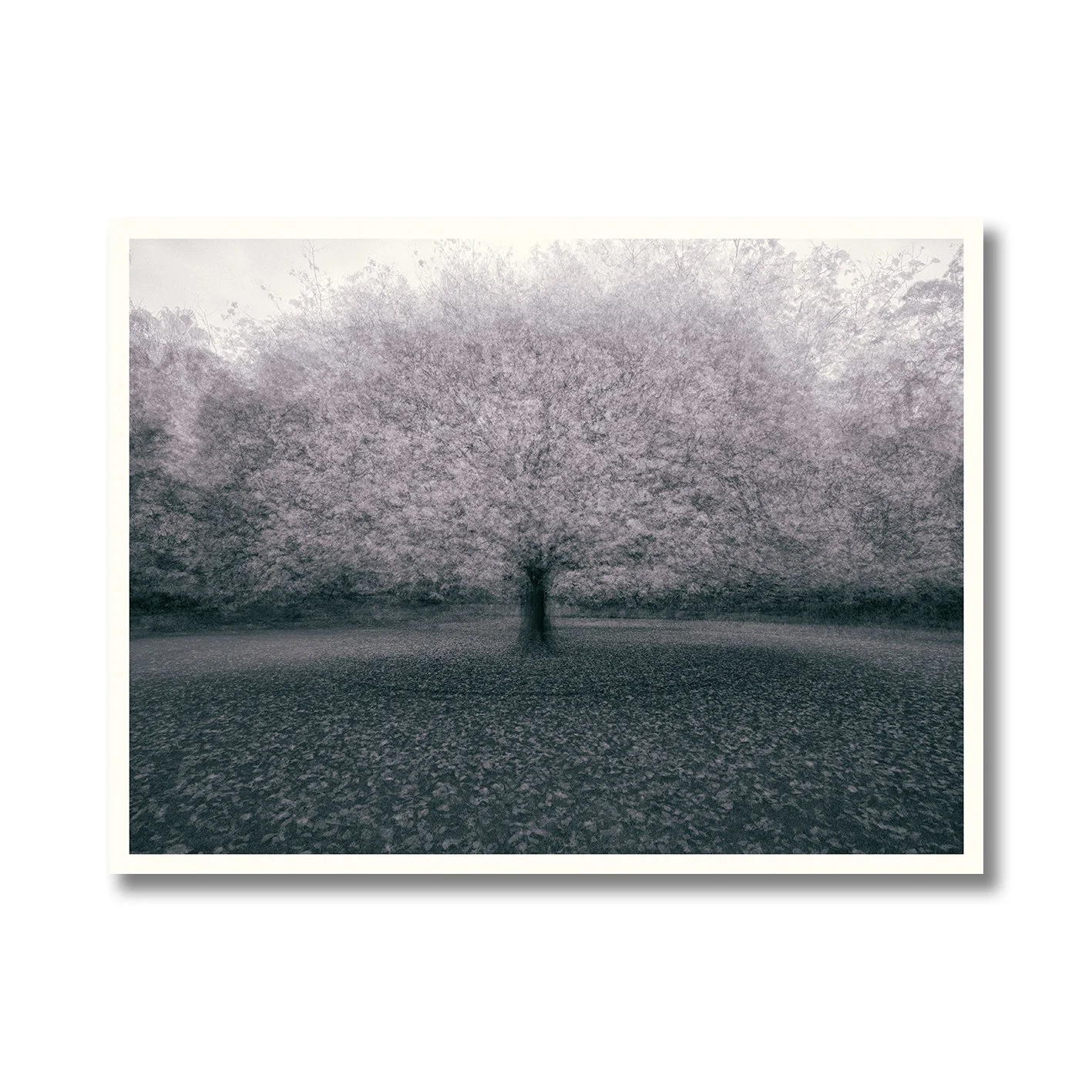
Trees work exceptionally well because their structure remains recognisable even after several exposures.
2. Use Gentle Camera Movement
Small movements between exposures create soft texture and painterly transitions.
Large movements create more abstract and chaotic results.
Experiment with:
slight panning
subtle rotation
forward movement
focus shifts
3. Watch Exposure Carefully
Exposure management becomes critical when combining many frames.
Underexposing slightly often preserves highlight detail and prevents the final image from becoming washed out.
4. Experiment with Different Exposure Counts
The number of exposures dramatically changes the final look.
2–3 Exposures
Subtle layered effect
4–6 Exposures
Noticeable atmosphere and movement
7–9 Exposures
Dreamlike, abstract, painterly appearance
The Fujifilm X-T5’s ability to support nine exposures gives photographers enormous creative flexibility.
Multiple Exposures on Film Cameras
Long before digital cameras existed, photographers created multiple exposures directly on film.
Unlike digital systems, film cameras physically expose the same frame of film multiple times.
This could be done in several ways:
Using a Dedicated Multiple Exposure Lever
Some film cameras include a built-in multiple exposure function that allows the shutter to be re-cocked without advancing the film.
Classic cameras with this feature include:
Nikon FM2
Canon AE-1
Pentax LX
Minolta XD
Several medium format systems
This method keeps the film perfectly aligned between exposures.
Rewinding the Film Manually
Some photographers would partially rewind the film and carefully re-shoot the same frame.
This technique was far more difficult because exact frame alignment was challenging.
Even slight film movement could create accidental shifts between exposures.
Masking Techniques
Advanced film photographers sometimes masked portions of the frame between exposures to control where the second image appeared.
This was commonly used in experimental portraiture and surreal fine art photography.
Why Digital Multiple Exposures Changed Everything
Digital cameras like the Fujifilm X-T5 have made multiple exposure photography dramatically more accessible.
Modern systems offer:
Live preview assistance
Exposure balancing
Instant feedback
Higher exposure counts
Flexible blending modes
Easier experimentation
This removes much of the uncertainty that existed with film while still preserving the artistic unpredictability that makes multiple exposures exciting.
Other Cameras That Offer Multiple Exposures
Although Fujifilm has one of the most creative implementations, other camera brands also offer multiple exposure systems.
These include:
Canon EOS mirrorless cameras
Nikon Z series
Olympus / OM System cameras
Panasonic Lumix models
Some Sony cameras
Select Leica cameras
However, Fujifilm’s Film Simulations and tactile shooting experience make the X-T5 especially attractive for fine art photographers.
The Growing Popularity of In-Camera Fine Art Photography
As photography becomes increasingly digital and AI-driven, many photographers are returning to more hands-on creative processes.
In-camera multiple exposures encourage slower and more intentional photography.
Rather than endlessly editing on a computer, photographers can create expressive and unique images directly inside the camera.
This approach feels authentic, organic, and deeply personal.
Every multiple exposure becomes a one-of-a-kind image shaped by movement, timing, light, and instinct.
Final Thoughts
The Fujifilm X-T5 is far more than just a high-resolution mirrorless camera. Its advanced multiple exposure system opens the door to an entirely different style of photography — one built around experimentation, atmosphere, emotion, and artistic interpretation.
Whether using Additive mode for dramatic layered imagery, Average mode for soft balanced compositions, Bright mode for luminous highlights, or Dark mode for moody monochrome depth, the X-T5 gives photographers the tools to create photographs that feel unique and timeless.
For photographers searching for a way to move beyond literal photography and create work with emotion, abstraction, and artistic presence, multiple exposures remain one of the most powerful creative techniques available today.