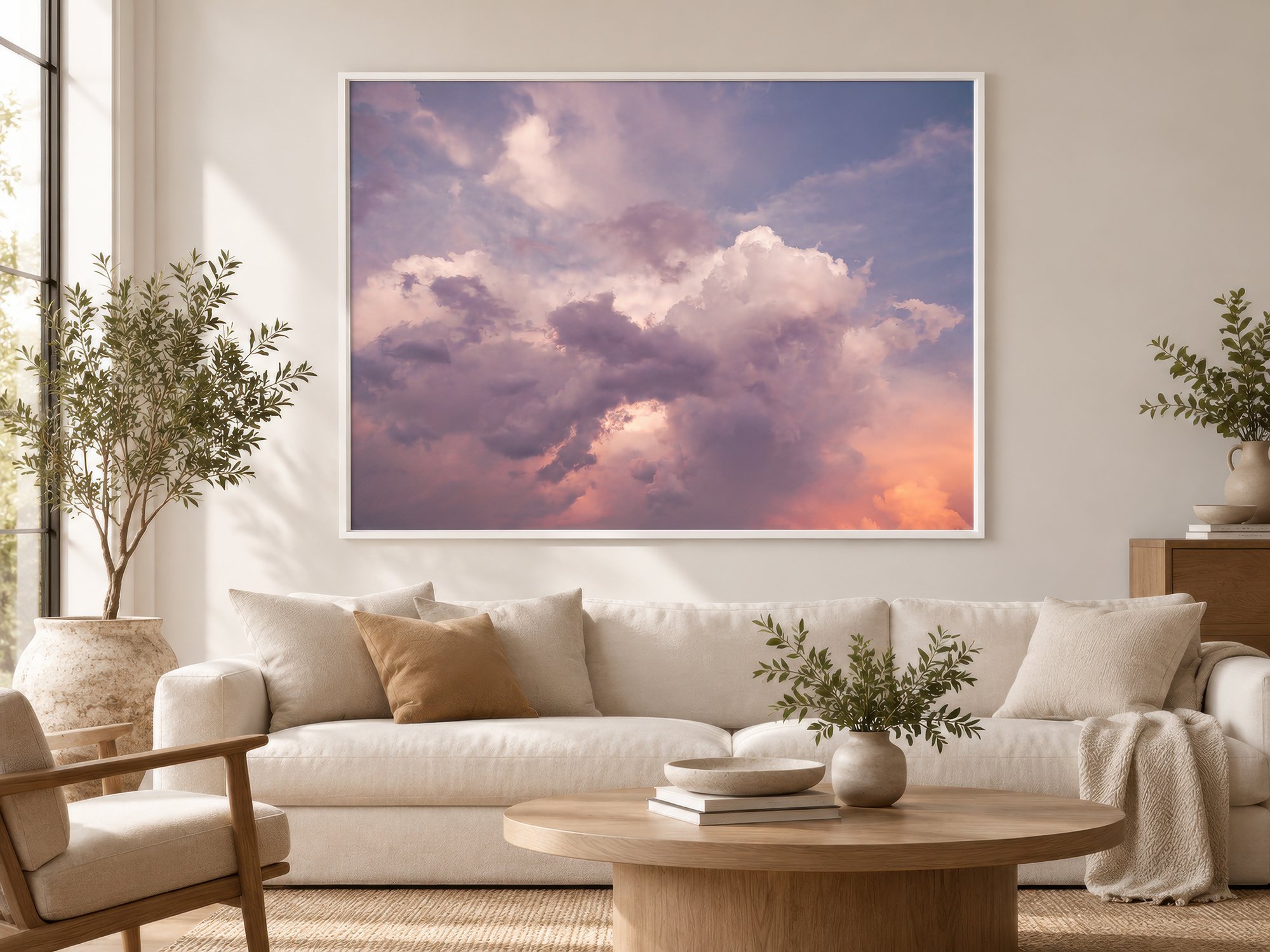
There is a subtle relationship between a photograph and the space it occupies. The same image can feel intimate and contemplative at a modest size, yet become commanding and architectural when presented on a larger scale. Choosing the right dimensions is therefore about more than filling an empty wall. It is about finding the balance between the artwork, its surroundings and the atmosphere of a room.
Fine art photography has a remarkable ability to influence how a space is experienced. A sweeping landscape can introduce a sense of openness, a minimalist composition can create visual calm, and a striking black and white architectural photograph can bring structure and definition to a contemporary interior.
Yet one of the most common questions when selecting photographic artwork is also one of the most practical: What size should I choose?
Understanding a few principles of proportion, placement and presentation can make that decision considerably easier.
Understanding Scale and Proportion
The first consideration is the relationship between the artwork and the wall on which it will hang.
A large photograph placed on an expansive wall can create a sense of purpose and visual balance. Conversely, a smaller piece surrounded by generous negative space can feel equally intentional, particularly in minimalist interiors.
Neither approach is inherently better. The important consideration is whether the scale feels deliberate.
An artwork that is too small for its surroundings may appear disconnected from the room, while an oversized piece placed without sufficient breathing space can make an interior feel crowded.
A useful starting point is to consider not only the available wall dimensions but also nearby furniture, architectural features and the distance from which the photograph will normally be viewed.
Choosing Artwork for Above a Sofa
The living room is one of the most popular places to display fine art photography, particularly above a sofa.
As a general design guideline, artwork positioned above a sofa can occupy approximately two-thirds to three-quarters of the sofa's width. This is not a fixed rule, but it can help establish a pleasing relationship between the furniture and the artwork.
For example, above a sofa measuring 240 cm wide, an artwork approximately 160–180 cm wide may create a well-balanced composition.
A smaller photograph can still work beautifully, especially when surrounded by intentional negative space or incorporated into a thoughtfully arranged group.
The height of the artwork also matters. In many interiors, positioning the lower edge approximately 15–25 cm above the sofa creates a comfortable visual connection between the two.
Ultimately, the photograph should feel connected to the furniture rather than floating independently on the wall.
Large Fine Art Photography: The Power of a Statement Piece
There is something distinctive about experiencing a photographic image at a generous scale.
Fine details become more apparent. Textures, subtle tonal transitions and architectural lines gain a greater physical presence. A mountain range can communicate an extraordinary sense of distance, while an expansive coastal landscape can introduce a feeling of tranquillity into an otherwise busy interior.
Large-format fine art photography is particularly effective in open-plan living areas, spacious entrance halls, offices and contemporary interiors with uncluttered walls.
However, a large artwork does not necessarily need to be dramatic in subject matter.
Minimalist photographs, particularly those featuring restrained colour palettes, open skies, water or carefully composed architectural forms, often become more compelling as their dimensions increase. Their simplicity gives the composition room to breathe.
Black and white photography can also be especially effective at larger sizes. Without colour competing for attention, the relationship between light, shadow, shape and texture becomes the defining visual experience.
Explore the NIKART Fine Art Photography Collections for limited-edition landscapes, architectural studies and monochrome compositions.
Finding the Right Size for a Bedroom
Bedrooms generally benefit from artwork that complements the sense of rest and balance within the space.
A single landscape photograph above a bed can create a quiet focal point without introducing unnecessary visual complexity.
As with artwork above a sofa, the width of the bed can provide a useful reference. A photograph or framed composition spanning approximately two-thirds to three-quarters of the bed's width often feels proportionate, although headboards, bedside furniture and ceiling height may influence the final choice.
Subjects featuring water, distant horizons, gentle atmospheric conditions or minimalist landscapes can introduce a sense of openness.
For a more contemporary bedroom, black and white architectural photography can offer an elegant alternative, particularly where the interior features restrained furnishings and a neutral colour palette.
It is also worth considering how the photograph will appear from different positions in the room. An image viewed primarily from the doorway may benefit from a stronger composition, while artwork experienced at closer distances can reward attention through finer details.
Any artwork positioned above a bed should be securely mounted using fixings appropriate to the wall and finished weight.
Selecting Photography for Hallways and Smaller Spaces
Hallways, studies and smaller rooms present different opportunities.
A narrow wall does not always require a small photograph. In some cases, a substantial vertical composition can emphasise height and create a stronger architectural connection with the space.
Conversely, a modestly sized photograph placed within an uncluttered section of wall can establish an intimate viewing experience.
In a hallway, consider the direction of movement and the distance from which the artwork first becomes visible.
An architectural photograph with strong leading lines may introduce a sense of depth, while a minimalist landscape can create a moment of visual pause.
Long corridors can also accommodate a carefully arranged sequence of photographs, particularly when their framing, tonal treatment and spacing remain consistent.
The aim is not simply to decorate every available section of wall, but to establish a visual rhythm that complements the architecture.
Choosing Artwork for a Home Office
Fine art photography can bring personality and refinement to a working environment without overwhelming the room.
In offices, the ideal artwork size often depends on whether the photograph is intended to be a focal point or a quieter element within the wider interior.
A large architectural image behind a desk can introduce structure and confidence, while a smaller landscape positioned beside a reading chair may provide a welcome contrast to the functional character of the space.
Black and white photography works particularly well in offices where timber, metal, glass and neutral furnishings are prominent.
For those who prefer panoramic compositions, a wide photograph can complement a long desk, credenza or meeting area.
NIKART's Melbourne Mega Panorama demonstrates how an expansive cityscape can bring architectural interest to a contemporary interior.
How the Shape of a Photograph Changes Its Appearance
Size is only one part of the equation. The photograph's aspect ratio — the relationship between its width and height — also influences how it occupies a wall.
Landscape-format photographs tend to complement wider spaces, particularly above sofas, beds and sideboards.
Portrait-format images can be effective on narrow walls, beside doorways or in rooms with higher ceilings.
Square compositions offer a sense of stability and symmetry, making them well suited to carefully balanced interiors.
Panoramic photographs introduce a different visual experience, emphasising breadth and horizontal movement. Their elongated proportions are particularly effective above long pieces of furniture or along wide architectural surfaces.
Importantly, not every photograph should be made to fit an arbitrary set of dimensions.
The original composition plays a central role in the artwork's visual identity. Cropping an image simply to fit a particular frame or wall can compromise the balance the photographer intended.
For this reason, choosing a size that respects the photograph's proportions is often more successful than forcing the image into a predetermined shape.
Framing, Borders and the Finished Dimensions
One detail that is frequently overlooked when selecting photographic artwork is the difference between the image size and the overall finished dimensions.
A photograph measuring 100 cm wide may occupy considerably more wall space once a border and frame are included.
For example, a 100 × 75 cm photograph presented with a 5 cm border on every side would occupy 110 × 85 cm before the external frame moulding is added.
The finished frame dimensions depend on the selected presentation style and construction.
This distinction becomes particularly important when an artwork is intended to fit between windows, above furniture or within a wall recess.
Different finishes also influence the visual presence of a photograph.
A traditional frame can provide a defined boundary between the image and its surroundings. A white border may create a sense of separation and refinement, while an edge-to-edge presentation offers a more contemporary appearance.
Acrylic face mounting produces a sleek, frameless presentation, allowing the photograph to become a prominent feature within modern interiors.
Canvas can introduce a softer material quality, particularly in relaxed residential environments.
The ideal presentation should complement both the photograph and the character of the room.
Viewing Distance and Photographic Detail
One of the advantages of fine art photography is the extraordinary amount of detail that can be preserved within a carefully produced print.
However, that detail is experienced differently depending on viewing distance.
A large photograph positioned across a spacious living room must communicate its composition from several metres away, while also retaining enough refinement to reward closer inspection.
An intimate architectural study or a photograph built around subtle textures may be especially compelling when displayed in a location where it can be approached and examined.
When choosing a print size, consider where people will naturally stand or sit.
The strongest presentation is one in which the photograph's composition remains effective at the intended viewing distance.
A Simple Way to Visualise Artwork Before Buying
It can be surprisingly difficult to judge photographic artwork sizes from measurements alone.
A useful method is to mark out the proposed dimensions on the wall using low-tack painter's tape, following the manufacturer's instructions to avoid damaging the surface.
Alternatively, cut a piece of paper to the approximate finished dimensions and temporarily position it where the artwork will hang.
Stand back and observe the proposed size from the areas where the photograph will normally be viewed.
Consider how it relates to the furniture below, the surrounding wall space and any nearby architectural features.
It is also worth taking a photograph of the room with the outline in position. Seeing the proposed proportions within a photograph can sometimes make the relationship easier to assess.
For framed artworks, remember to mark the outer finished dimensions, not simply the printed image size.
This simple exercise can provide far greater confidence before making a purchase.
Why Print Quality Matters at Larger Sizes
As photographic artwork becomes larger, the quality of the original image, printing process and finishing materials becomes increasingly important.
Subtle gradations in skies, shadow detail within architectural forms, and the delicate textures of natural landscapes all depend on precise reproduction.
At NIKART Studio & Gallery in Williamstown, Melbourne, each limited-edition photograph is personally printed, finished and quality-checked in-house.
This hands-on approach allows careful attention to tonal balance, colour reproduction and the finished presentation of each artwork.
The intention is to preserve the visual character of the original photograph, whether presented as a smaller piece for an intimate space or a substantial statement artwork.
For collectors considering a particular photograph in a larger format, it is always worthwhile checking the available sizes and presentation options before deciding.
Choosing Art That Feels Right for Your Space
There is no universal formula for choosing the perfect photographic artwork size.
A generous landscape can create a sense of openness in a contemporary living room. A restrained black and white photograph can bring clarity and structure to an office. A smaller, carefully positioned image can become a deeply personal element within a bedroom or quiet reading space.
What matters most is the relationship between the photograph, the space and the experience it creates.
The most successful choice is not necessarily the largest artwork that will fit, nor the smallest that leaves sufficient wall space.
It is the size that allows the photograph to express its character while remaining in harmony with its surroundings.
At NIKART Studio & Gallery, photography is approached as a lasting art form, with each limited-edition print created to preserve the detail, atmosphere and artistic intention of the original image.
Explore the NIKART fine art photography collection to discover artworks suited to a variety of interiors, or visit our Williamstown studio and gallery to experience the scale and finish of photographic prints in person.
Nick Psomiadis is a Melbourne-based fine art photographer and founder of NIKART Studio & Gallery in Williamstown, Victoria.